Edith Hall Dohan, author of Italic Tomb Groups in the University Museum (1942) was an important pioneer in the study of early Etruscan tomb artifacts. She was also an American female scholar who had both a career and family at an early moment in the first half of the 20th century. After putting off the prospect of marriage to study and publish on the archaeology of Bronze Age Crete, she married and started a family later in life than was the norm for the early 20th century.
Extraordinarily, she also began a second career at the age of 54 as a scholar of early Etruscan tomb groups, having been appointed the associate curator of the Mediterranean Section of the University of Pennsylvania Museum in 1931. Here a large cache of Etruscan artifacts and tomb groups had been languishing for 50 years after notorious collector and archaeologist Arthur Frothingham had acquired them for the museum. These artifacts had been excavated mainly at Vulci, Pitigliano and Faliscan Narce, from tombs about which little was known at the time.
She embarked on the painstaking task of examining all the materials left there, including inventory lists, photographs, records of sale, and the artifacts themselves. Italic Tomb Groups in the University Museum (1942, published by Oxford University Press and by the University of Pennsylvania Press) was a tour de force, providing crucial context and chronology for these early artifacts, and highlighting the importance of archival work in nascent museum collections. Sadly, she died unexpectedly the year after her book was published, well before the reviews came to press.
Praise for her book was universal and emphatic. The famed art historian J.D. Beazley wrote, “The result is a work that will remain a treasure of loci classici not only for important types of bronze or of clay vase, but also for the many small and puzzling miscellanea that occur in graves and are commonly neglected…The whole publication is in many respects an advance on anything that has been done in this field” (The Classical Review 58(1944): 30-31).
Rhys Carpenter was likewise full of praise for Dohan’s painstaking work, noting that one of her lasting contributions was to confirm “the modern trend to lower the chronology of the earliest Etruscan finds” (The Art Bulletin 27(1945): 212). Her meticulous examination and documentation of these early Etruscan artifacts set a strong foundation for future studies. It is hard to imagine to what extent the field would have been restricted if Dohan had not committed the final decade of her life to this work.
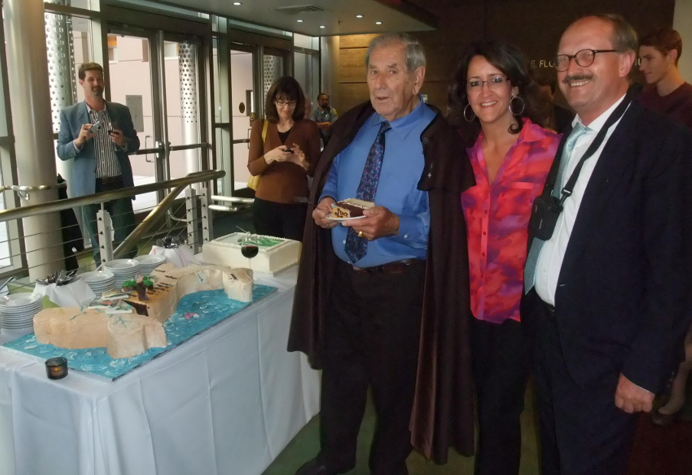
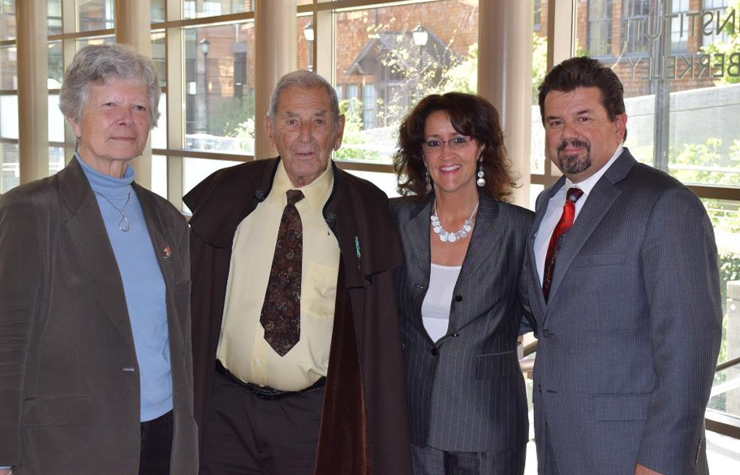
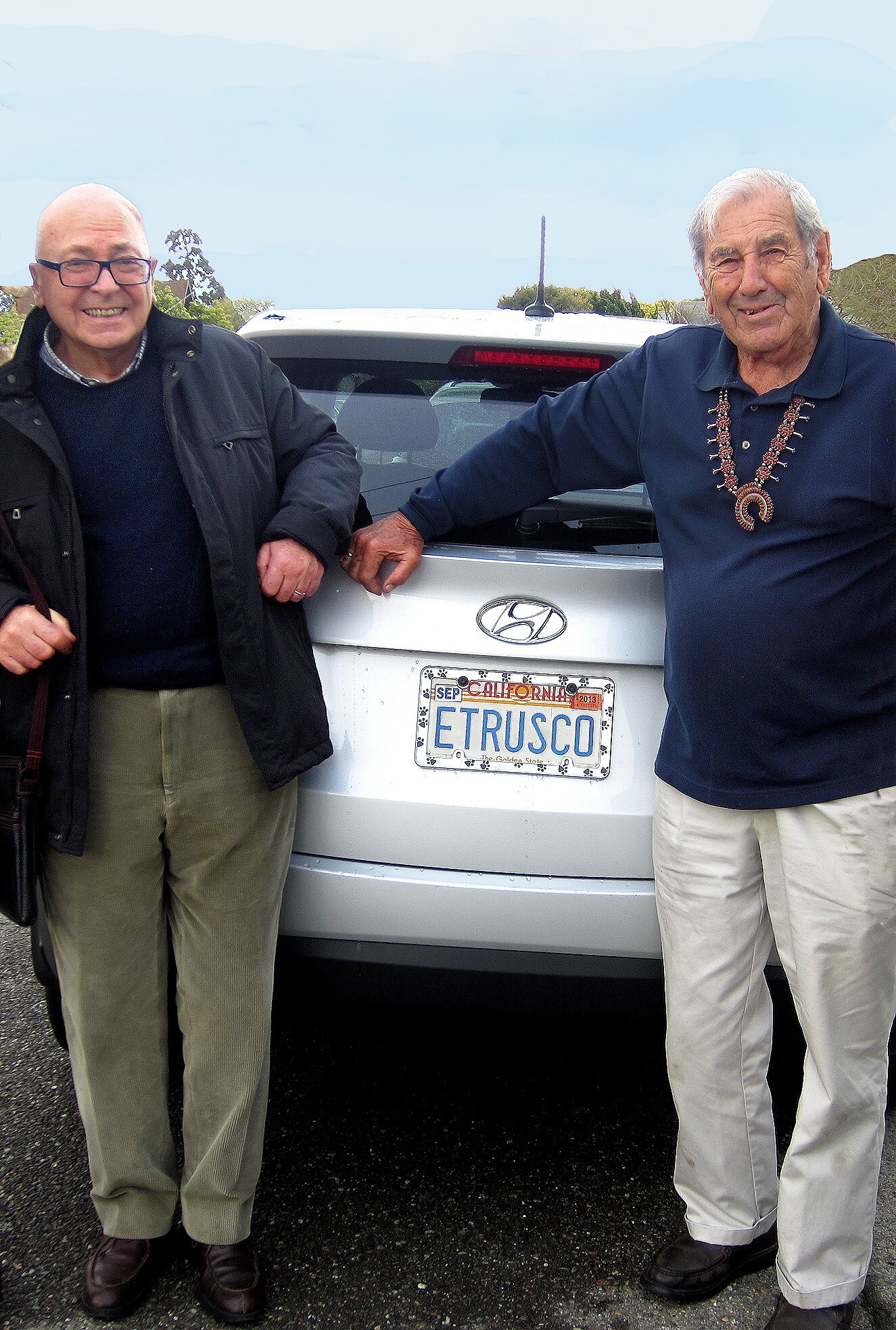
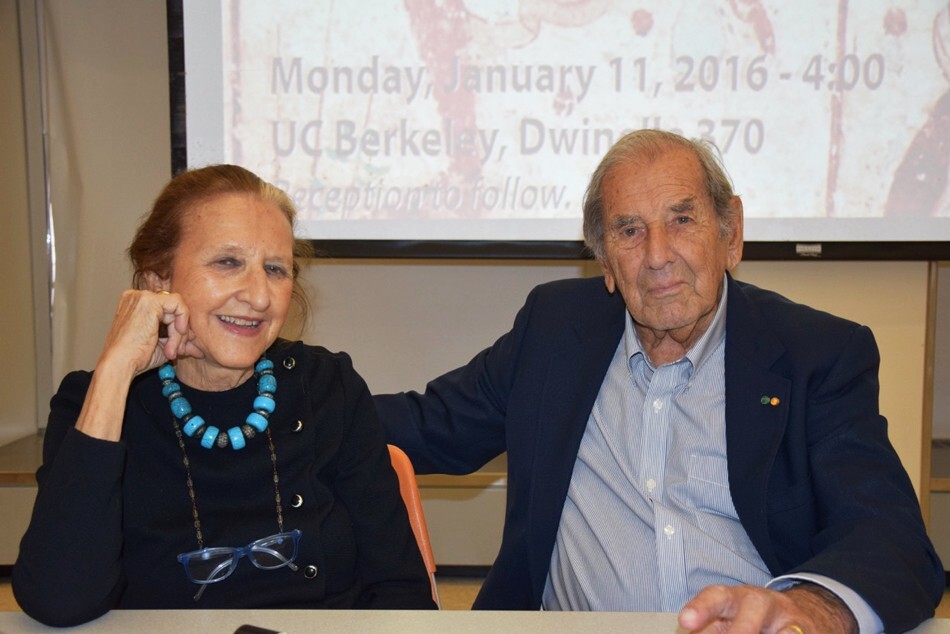
Mario Del Chiaro is credited by some as the founder of Etruscology in America. He was certainly an influential pioneer who brought the study of the Etruscans westward to California.
Inspired by the idea that all Etruscan artifacts in museums and collections in the US could be inventoried, he set out to establish a kind of database at an early date, visiting numerous collections and making notes on everything he saw.
Born in San Francisco in 1925, Del Chiaro was the son of Italian immigrants who left Italy to seek the American dream. He entered the US Army-Air Force during WWII when he was only 17 years old.
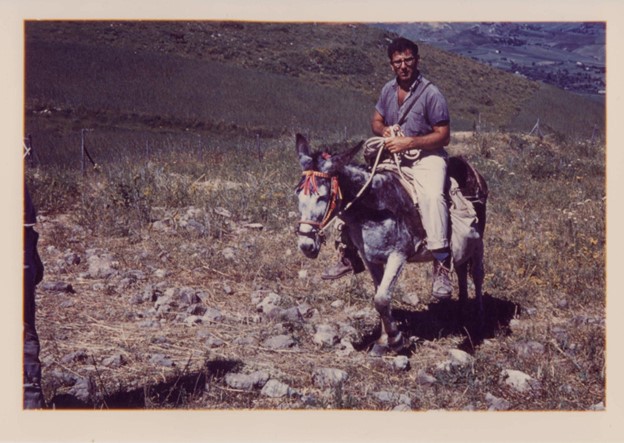
After service he received funding through the GI Bill which allowed him to pursue higher education. Mario started his university studies in 1949 at the University of California Berkeley and earned a BA, MA and PhD in the newly founded History of Art Department. Mario was the second ever PhD in the department, and his dissertation was on an Etruscan topic, “The Genucilia Group” (published in 1957). Upon graduating he was offered a job at the University of Goleta (now the University of California, Santa Barbara).
Mario’s extensive research throughout his career in the field of Mediterranean studies took him from Sardis, Spain and beyond. His long list of publications speaks to the many contributions he made in the field of ancient Mediterranean art and archaeology, with special emphasis on ancient Italy and the Etruscans. In fact, Mario’s contributions to the field are so vast and extensive that he was knighted twice by the Republic of Italy for his work on pre-Roman Italy. In 1968 he was elected as a Foreign Member of the Istituto di Studi Etruschi ed Italici.
He is especially known for his work at Caere, producing an important book, Etruscan Red-figured Vase Painting at Caere (Berkeley) in 1974. After his retirement, he gave his enormous collection of photographs of Etruscan vases (mostly those attributed to Caere, Tarquinia and the Ager Faliscus) to the Getty Research Institute in Los Angeles. The collection is now known as The Mario Del Chiaro Photographic Archive. His lasting influence continues with the establishment of the Mario Del Chiaro Center for the study of Ancient Italy at UC Berkeley and the annual Del Chiaro Lecture Series held there.

Emeline Hurd Hill Richardson (1910-1999) made history in the study of the Etruscans in America by writing the first introductory text widely available in English: The Etruscans; Their Art and Civilization (Chicago 1964).
She was born in Buffalo, New York, in 1910 and earned an undergraduate degree in geology from Radcliff in 1933 and then an MA in Classical Archaeology at Radcliffe in 1935. After studying with Bernard Ashmole at the University of London between 1935 and 36, she returned to Radcliffe to complete a PhD three years later. Her dissertation, on Etruscan bronze votive figurines, was inspired by the suggestion of Ashmole who had told her, “This needs doing.” Her interest and expertise in Etruscan bronzes and sculpture would be a defining aspect of her academic life.
Richardson took a teaching position at Wheaton in 1941 and remained there until 1949 when she was awarded a fellowship at the American Academy in Rome. She soon became a staff member at the new excavations at Cosa, her involvement initially built upon the expectation that there would be an Etruscan phase to the site. It was not found yet she continued to work at the site until 1955 where, importantly, she met Lawrence Richarson, another staff member at Cosa, who would become her spouse and frequent collaborator over the next five decades.
Along with Larry and Frank Brown, Emmy co-authored two important works on Cosa, Cosa II: the temples of the Arx in 1960 and Cosa III: the buildings of the forum; colony, municipium, and village in 1993.
After returning to the US in 1955, she held a teaching position at Yale until 1966 when her husband accepted a position at Duke University. She then taught at the IFA at New York University for a year before taking a position as Professor of Classical Archaeology at UNC Chapel Hill in 1968 where she remained until retirement in 1979. During her career, Richardson published on a broad range of topics– Etruscan mirrors, language, iconography, religion and dress– including the seminal textbook The Etruscans: Their Art and Civilization (Chicago 1964).
In 1994, Emeline Richardson received the Gold Medal Award for Distinguished Archaeological Achievement, and was noted to be “the first important American scholar in this field.” Her work The Etruscans: Their Art and Civilization “marked the first comprehensive introduction to the Etruscans in this country, adopted as a textbook in many courses.” An elected member of the German Archaeological Institute and the Istituto di Studi Etruschi ed Italici, she was rightfully called the ‘Dean of Etruscan studies” in America at that time. That same year, Professor Richardson received the Centennial medal, the highest award given by the American Academy in Rome. She passed away in 1999.
The greatest achievement of Kyle Phillips was in the excavation of the site of Poggio Civitate (Murlo), beginning in 1966, where the amazing discoveries created a fundamental new chapter in Etruscan archaeology. Phillips, born in Cabot, Vermont in 1934, attended Bowdoin College, where he earned his B.A. in Greek in 1956 and continued his studies at Princeton, receiving the MA and Ph.D. in Classical Archaeology (1962). His early experiences in the field took him to Morgantina in Sicily, where he broke in as a staff member working under Erik Sjöqvist and Richard Still well (1957, 1958, 1963). Not yet attracted by Etruscan studies, he wrote his dissertation on the famed Roman mosaic from Palestrins, and turned out his first article in Art Bulletin on the Ganymede mosaic from Sicily.
In 1961 he began his years of working in the area of Siena, exploring several small sites. Having become friends with the great Italian expert on early Italy, Ranuccio Bianchi Bandinelli, Phillips was led to explore a site where there was evidence of Etruscan occupation, the hill of Poggio Civitate in the comune of Murlo. The heart of the site, known locally as Pian del Tesoro, indeed yielded treasures, including monumental architecture and imposing lifesize terracotta sculptures, as well as an abundamce of cultural material (especially pottery) that enlarged the context for the astonishing habitation of the Orientalizing and Archaic periods. By this time, Kyle had become employed as Assistant Professor in the Department of Classical and Near Eastern Archaeology at Bryn Mawr College, and for many years the excavation would be continued with Bryn Mawr support.

Kyle Phillips was always praised for his diligence in submitting regular interim reports on the excavations to the American Journal of Archaeology in the period from 1967 to 1983. Much honored by Italian colleagues, he was elected a Foreign Member of the Istituto di Studi Etruschi ed Italici in 1968. From 1973 he was joined by his student and friend Erik O. Nielsen, who later would also be Phillips’ successor in directing the project. He organized an exhibition on Poggio Civitate in Florence and Siena in 1970, including an extensive catalogue, and also contributed a major section to the 1985 Etruscan exhibition Case e Palazzi d’Etruria (edited by Simonetta Stopponi). At the time of his death Kyle had completed a manuscript that actually gave an overall major synthesis of his knowledge of the site. It was published as In the Hills of Tuscany, Recent Excavations at the Etruscan Site of Poggio Civitate (Murlo, Siena), published in 1993 by the University Museum of the University of Pennsylvania.

Larissa Bonfante led the way from the pioneering days of Etruscan studies in America into a period in the second half of the 20th century in which she emerged as the leader of the numerous students, professors, and programs in the United States. Trained by Otto Brendel at Columbia University, where she received the Ph.D., she went on to spend much of her career as a member of the Classics Department at New York University. In her distinguished career she was elected in 1973 as a Foreign Member of the Istituto di Studi Etruscni ed Italici, for which she later served as founder and first director of the North American Section. Larissa was awarded the Gold Medal for Distinguished Archaeological Achievement of the Archaeological Institute of America in 2007.
Bonfante’s landmark study of Etruscan Dress (1975, updated edition 2003) revealed the relationship of Etruscan style to other parts of the ancient world, especially the Near East (Southwest Asia) and Greece. She established valuable chronological reference points based on a multi-disciplinary approach to the evidence, combining the study of material culture with artistic representations and Greco-Roman literary references. In her study of ancient dress, she insisted that nudity was also a form of costume, in a key article in American Journal of Archaeology, 1989.
Nor did she neglect the Etruscan language itself: her storied collaboration with her father, Giuliano Bonfante, an Indo-Europeanist and scholar of the Etruscan language, grounded the “enigmatic” Etruscan language in the sober reality of the evidence for its vocabulary and grammar. This father-daughter publication, The Etruscan Language-An Introduction (1983, 2nd edition, 2002), Manchester University Press) made the study of the Etruscan language available in English for the first time in America. It was immediately hailed not only as an up-to-date historical reference work for scholars, but it also became a popular textbook, sparking renewed interest in the Etruscans for a new generation of American scholars.
Bonfante’s edited volume, Etruscan Life and Afterlife: A Handbook of Etruscan Studies (1986) was a tour de force of international cooperation to provide English-speaking non-specialist readers with the latest in Etruscan scholarship. Her final book, Images and Translations: The Etruscans Abroad (completed before her death in 2019, but published posthumously in 2023, University of Michigan Press) was a product of her Thomas Spencer Jerome Lecture Series, a prestigious endowed lectureship jointly administered by the University of Michigan and the American Academy in Rome. Her topic of Etruscan social interactions with other ancient cultures harkened back to her long-term interest in Etruscan dress that was such a hallmark of her scholarly and her personal style. Few of the leading Etruscologists of the 20th century did more to rescue the Etruscans from the realm of the “mysterious” than Larissa Bonfante
The Mario Del Chiaro Center reflects the influence of the life and work of Dr. Mario Del Chiaro, creating its own traditions within the framework of the Graduate Group in Ancient History and Mediterranean Archaeology at Berkeley. Sponsored research projects provide opportunities for students and their supervisors to carry out investigations on Etruscan and Roman archaeological subjects. The Center fosters student participation in excavations as well. It organizes conferences, workshops, and exhibitions and is especially well known for its annual Del Chiaro Lecture Series, founded in 2012. With invitations from Interim Director Lisa Pieraccini, distinguished archaeologists from North America and abroad have lectured at the Center on various aspects of ancient Italian studies.